


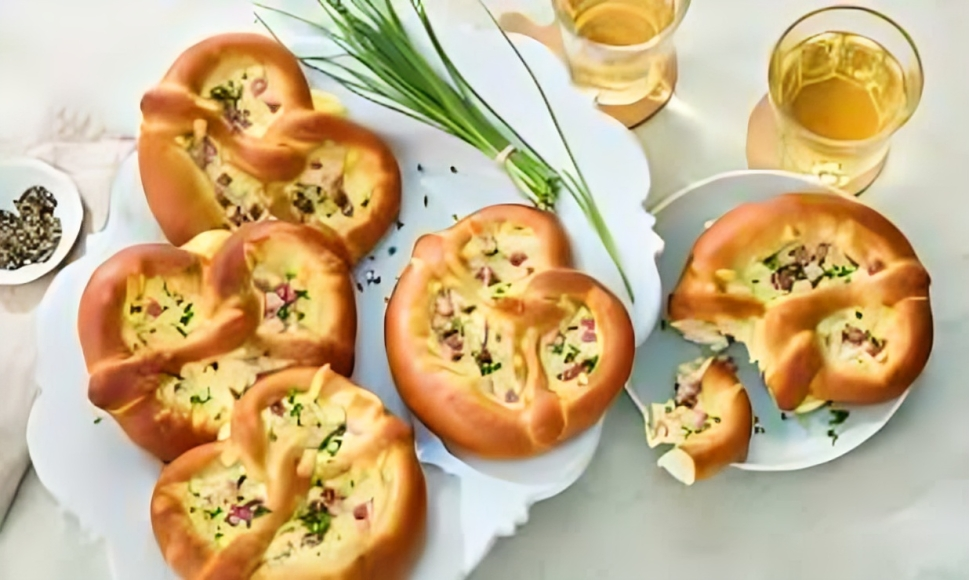
In the vibrant world of German cuisine, flammkuchen and brezeln stand out as beloved staples that blend rustic simplicity with irresistible flavor. Flammkuchen, a thin-crust flatbread topped with creamy ingredients, originates from the Alsace region but has become a nationwide favorite across Germany. Brezeln, the classic lye-dipped pretzels with their signature crust and soft interior, evoke images of bustling beer gardens and cozy taverns. Together, flammkuchen brezeln create a perfect pairing for casual gatherings or hearty meals. This article explores their rich heritage, preparation techniques, and modern appeal, offering practical insights for anyone eager to recreate these authentic German experiences at home or appreciate them during travels.
The Origins of Flammkuchen
Flammkuchen traces its roots to the borderlands of France and Germany, where farmers in the Middle Ages used leftover dough and a hot wood-fired oven to test baking temperatures. The name literally means “flame cake,” reflecting its quick cooking method that produces a crispy base with tender toppings. Traditionally prepared with crème fraîche, thinly sliced onions, and smoky bacon, it emerged as a humble yet satisfying dish for harvest workers. Over time, this specialty spread throughout southwestern Germany, evolving into a staple at festivals and restaurants. Its straightforward preparation highlights the German emphasis on fresh, local ingredients and communal dining. Understanding this history deepens appreciation for why flammkuchen remains a go-to comfort food today.
Brezeln: A Timeless German Pretzel Tradition
Brezeln have symbolized German baking craftsmanship since the early Middle Ages, with legends linking their shape to monastic prayers or lucky charms. The distinctive brown crust results from a brief dip in food-grade lye solution before baking, which creates the unique texture and nutty flavor. Soft on the inside and crisp outside, these pretzels are often enjoyed plain with coarse salt or paired with butter, mustard, and cold beer. Regional variations exist across Germany, from the larger Bavarian styles to sweeter Swabian versions. Their enduring popularity stems from versatility as both street food and table accompaniment. Brezeln embody the country’s deep-rooted baking heritage and continue to delight locals and visitors alike.
Crafting the Perfect Flammkuchen at Home
Making authentic flammkuchen begins with a simple dough of flour, water, yeast, salt, and a touch of oil, rolled paper-thin for the characteristic crisp base. The topping combines crème fraîche or sour cream with onions and bacon lardons, though vegetarian options with leeks or mushrooms work equally well. Bake at high heat—ideally 250°C or more—for just 10 to 12 minutes until the edges brown and the center bubbles. A pizza stone or baking steel mimics the traditional wood-fired oven effect. Season generously with pepper and nutmeg for depth. This straightforward process allows home cooks to capture the smoky, creamy essence that makes flammkuchen a crowd-pleaser.
The Art of Baking Authentic Brezeln
Authentic brezeln require careful attention to the lye bath, which demands food-safe sodium hydroxide diluted properly for safety and flavor. Start with a yeast dough enriched with milk and butter, let it rise, then shape into the classic twisted form. After a short rest, dip each brezeln briefly in the alkaline solution and sprinkle with coarse salt before baking until golden. The result delivers the unmistakable crunchy exterior and chewy center. Home bakers can use baking soda as a milder alternative, though it yields slightly different results. Freshly baked brezeln taste best warm, ideally paired with sweet mustard or herb butter. Mastering this technique brings genuine German bakery quality to any kitchen.
Variations and Creative Twists on Flammkuchen Brezeln
Modern interpretations of flammkuchen brezeln introduce exciting variations while honoring tradition. Sweet flammkuchen versions feature apples, cinnamon, and almonds for dessert, while savory options include smoked salmon, goat cheese, or seasonal vegetables. Brezeln appear in innovative forms too, such as stuffed varieties with cheese or chocolate-dipped mini pretzels. Combining both creates delightful appetizers: crumble brezeln over flammkuchen for added crunch or serve sliced flammkuchen alongside warm pretzels as a shared platter. These adaptations reflect Germany’s dynamic food scene, where chefs blend heritage recipes with contemporary tastes. Experimenting with toppings and pairings keeps flammkuchen brezeln relevant for new generations of food lovers.
Pairing and Serving Suggestions for an Unforgettable Experience
Flammkuchen brezeln shine when paired thoughtfully with beverages and sides. A crisp German white wine or fresh Pilsner complements the creamy richness of flammkuchen and the salty bite of brezeln. Serve them together on a wooden board with pickles, mustard, and sliced sausages for an authentic beer-garden spread. For casual evenings, offer flammkuchen as the main dish alongside a basket of warm brezeln. Vegetarian adaptations and gluten-free options make these classics accessible to diverse guests. Proper presentation—warm, fresh, and generously portioned—enhances the communal joy these dishes naturally inspire. Such thoughtful pairings transform simple ingredients into memorable German dining moments.
FAQs
What makes flammkuchen different from pizza?
Flammkuchen uses a thinner, yeast-leavened dough without tomato sauce, relying instead on crème fraîche for creaminess and onions for sweetness. It bakes at extremely high temperatures for a short time, resulting in a crispier base and lighter topping profile. This distinction highlights its Alsatian-German heritage rather than Italian influences, making it uniquely suited for quick, oven-fresh enjoyment alongside brezeln.
Can beginners successfully bake brezeln at home?
Yes, beginners can achieve good results by following precise measurements and safety guidelines for the lye dip or using a baking-soda substitute. Practice shaping the classic twist a few times, and bake in small batches to monitor browning. Fresh ingredients and proper rising time ensure the signature texture. With a bit of patience, homemade brezeln rival bakery versions and pair wonderfully with flammkuchen.
How do you store and reheat flammkuchen brezeln?
Store cooled flammkuchen and brezeln separately in airtight containers at room temperature for up to one day. Reheat flammkuchen in a hot oven for a few minutes to restore crispness, while briefly warming brezeln in the oven or toaster revives their texture. Avoid microwaving to prevent sogginess. Proper storage keeps the flavors fresh for quick snacks or leftovers.
Are there vegetarian or vegan options for these dishes?
Absolutely—replace bacon in flammkuchen with mushrooms or smoked tofu, and use plant-based crème fraîche alternatives. For brezeln, the classic dough is naturally vegetarian, and vegan versions omit butter or milk with easy substitutions. These adaptations maintain authentic taste while accommodating dietary preferences, allowing everyone to enjoy traditional flammkuchen brezeln.
Fazit
Flammkuchen brezeln embody the warmth, craftsmanship, and communal spirit of German cuisine. From their medieval origins to modern kitchen adaptations, these specialties offer endless opportunities for creativity and enjoyment. Whether prepared at home or savored in traditional settings, they deliver satisfying flavors rooted in quality ingredients and time-honored techniques. Embracing flammkuchen brezeln connects food enthusiasts to Germany’s rich culinary identity and encourages shared moments around the table. Exploring these classics provides both cultural insight and delicious rewards for anyone passionate about authentic European fare.
